Everyone knows about the classic guitar and it’s fretboard with 20-24 metal frets across the fretboard, spanning up to two octaves within the western musical realm. Frets are good for a variety of things, for one they increase sustain (time a note can be held) and eliminate the struggle for good intonation, the latter being a root cause for violinist’s superiority complexes.
It is true that a standard violin does not have frets, and might be more difficult to start playing than a guitar, but the frets of a guitar allow for guitarist to do so many unique and interesting things in addition to simply making guitar accessible to so many people. Frets allow the formation of complex chords, huge bends, and a wide range of tonality unique to the guitar and other fretted instruments.
On the contrary, frets can be extremely limiting in some cases. Most relevant to me: microtonal playing. Essentially, microtonal playing is playing outside of the western notes (C, C#, D, etc.). For example, a microtonal player might play with the frequencies between C and C#, creating a unique and interesting sound, especially to the western ear. Microtonal playing is more common in the east, with Turkey, in my experience, to be a hub for microtonal guitar playing. If you are interested, you can look at Tolgahan Çoğulu‘s work.
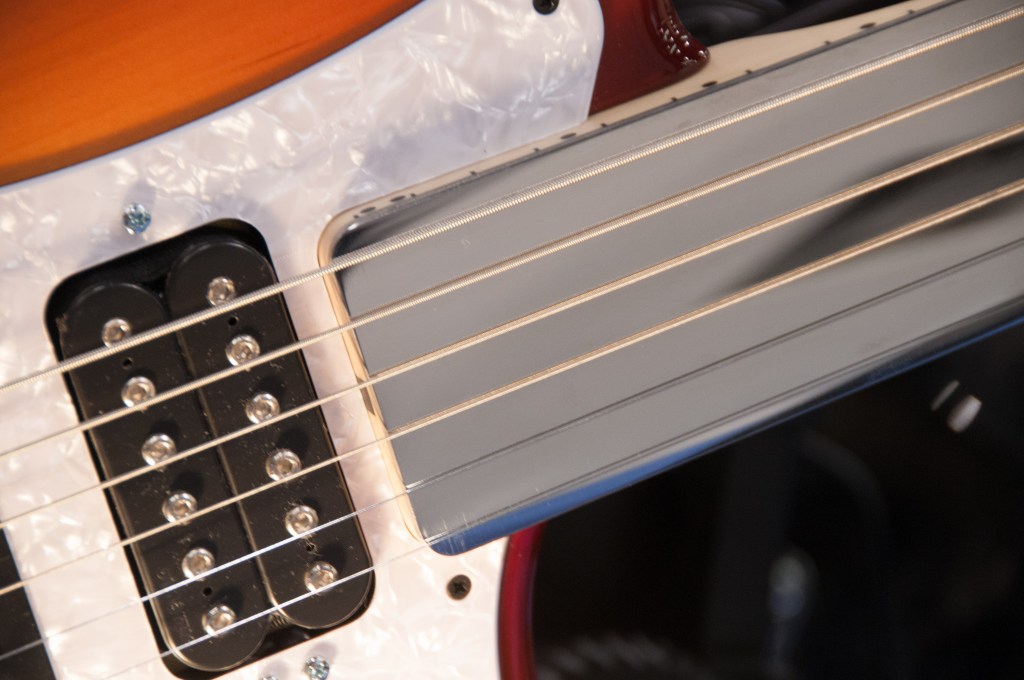
There are generally two ways to play microtonal guitar: fretless or microtonal fretted guitars. Fretless guitars aren’t limited by frets, and thus one can play anywhere on the fret[less]board, creating a much wider ability to play microtones. As stated earlier though, frets have their benefits, which is where fretted microtonal guitars come into play. As far as I’m aware, there are two types of fretted microtonal guitars: the ones like the one used by Stu Mackenzie of King Gizzard & the Lizard Wizard and the ones that Tolgahan Çoğulu uses. The main difference between the two being that the first is made more like a traditional guitar with extra frets in between the standard frets, where the other is completely adjustable with removable frets that can be placed all across the fretboard.
Unfortunately, getting your hands on a fretless or fretted microtonal guitar can be very difficult, especially in the states. The choices are either spend thousands of dollars on a custom made guitar, or look for a cheap, unethically-sourced guitar from overseas. Either way, the choices are still extremely limited. Fretless bases on the other hand, are actually rather common, but still do not act as a replacement for a proper guitar.
Alternatively, one could attempt to convert an existing guitar into a fretless or microtonal guitar. It shouldn’t be too difficult to convert a fretted guitar into a fretless, it should take basic woodworking skills, accessible tools and equipment, and a decent amount of online research. I wouldn’t recommend an inexperienced woodworker to attempt to make a fretted microtonal guitar though. Inserting frets needs special machinery and could crack the fretboard.
I’ve only played standard fretted guitars, but am in the process of finding a way to acquire a fretless guitar to start playing microtones. I, with no prior experience, might start a woodworking endeavor, and if I do I will try to record my experiences.


Leave a comment