I hate the modern use of the word A.I. First off, A.I. is not a new thing. “A Logical Calculus of the Ideas Immanent in Nervous Activity” by Warren McCulloch and Robert Pitts, the paper that proposed computational neural networks (the basis for machine learning), was published in 1943. A.I. has been implemented for a while: speech and optical recognition, finding the optimal route, fraud detection, and recommendation algorithms just to name a few.
A.I. appeared in the zeitgeist late 2022 with the release of ChatGPT. This is the first useful, widely available chat bot that got mainstream attention. GPT stands for Generative Pre-Trained Transformer. The transformer part is arguably the most important aspect of a chatbot like ChatGPT; the relatively famous paper that created the transformer, “Attention is All You Need” by Ashish Vaswan et. al, came out in 2017 from Google scientists.
A.I. is nothing more than math. While I don’t fully understand the math behind such a complex system like ChatGPT, I can explain (at a very high level) a simpler machine learning (abbreviated ML, a subset of A.I.) algorithm: linear regression.
Think of a function —y=mx+b for example. Within that function there are inputs (x) that undergo operations to get the output (y). Lets say we have a set of points (sample data).
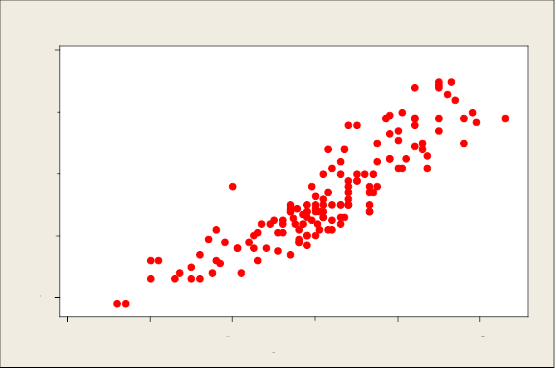
Through various mathematics we can find patterns to create a “line of best fit” for this data. This is called training the model. Using this line we can then try to predict outputs of inputs that have not been experimentally verified.
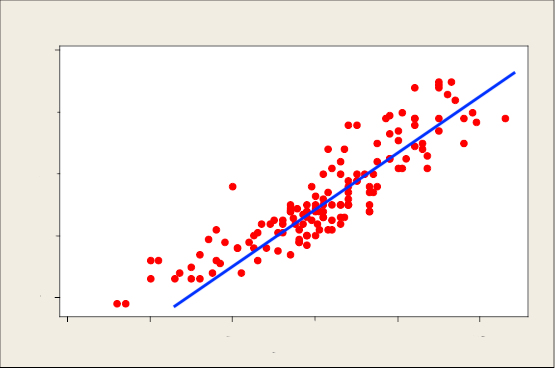
For this to be accurate, this operates there should be a discernible pattern in the data as it is presented.
This is essentially how ML works, with the caveat that instead of 1 dimensional inputs (ex. x = 5) the inputs are generally multidimensional vectors (ex. x= [5, 7, 2, 2, 9, 14]) and the operations are not simple arithmetic operations but vector operations. This is because the ability to get accurate outputs from a wide amount of inputs is one of linear regression’s strengths. Otherwise, they operate the same, all you need to do is input the x-vector into a function and get an output. Similarly, to create the function you need sample inputs and outputs; oftentimes the initial data is separated into sample data and verification data —the sample data is used to train the model and the verification data is a analyze accuracy.
Why did I go through all of that to write a blog post of “The Role of A.I. in the Creative Process”?
A.I. is simply just an application of math. It should be no more scary than a linear function or a triangle. This is something that I feel as people often forget.
I’ll link pt 2. here when I finish it.


Leave a comment